















SYED YUNIS BUKHARI
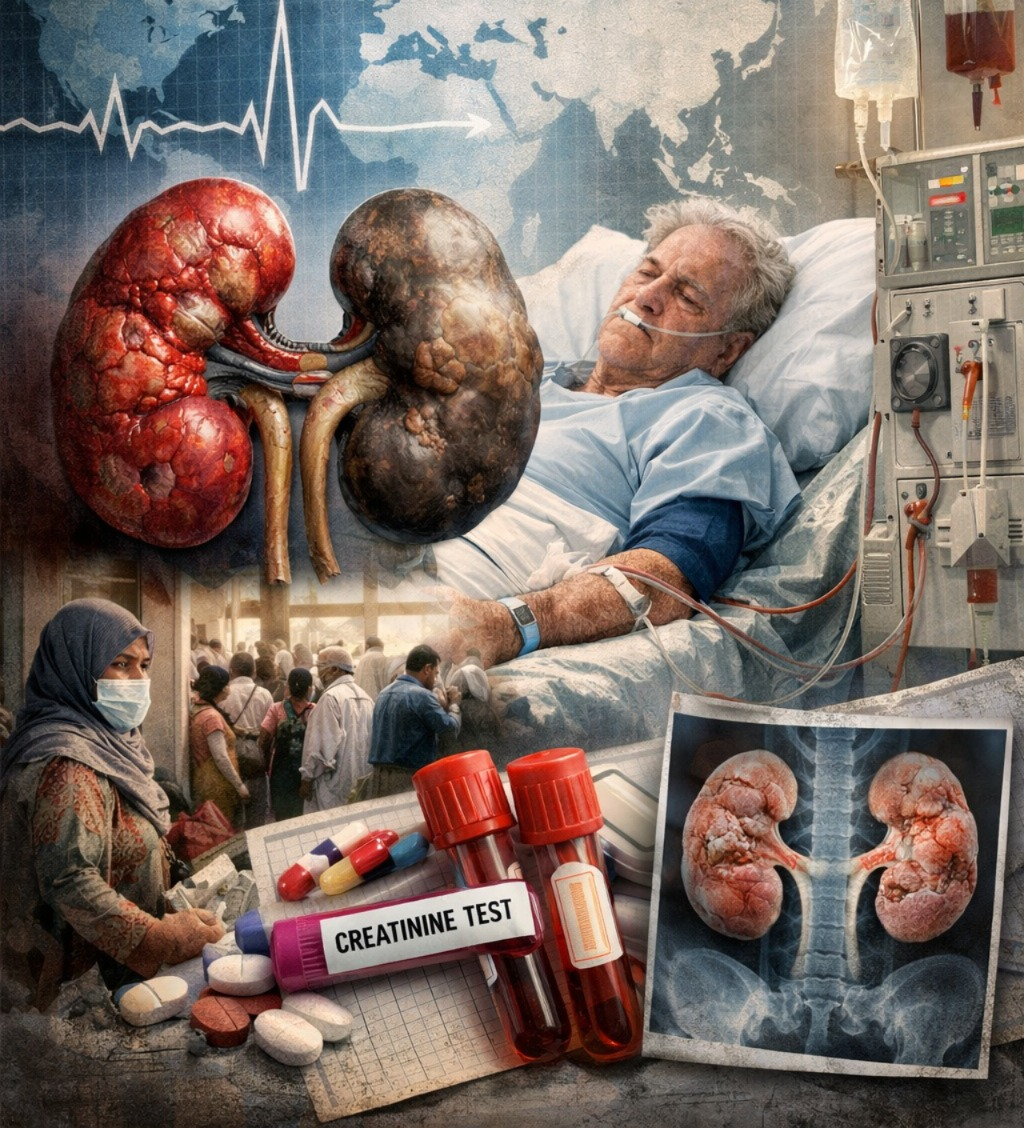
Across hospitals, dialysis centres, and outpatient clinics around the world, a quiet but dangerous health crisis is unfolding. Kidney failure once considered a relatively rare complication of severe illness is now emerging as a major global public health challenge. What makes this crisis particularly alarming is its silence. Chronic kidney disease (CKD) often progresses without obvious symptoms until it reaches an advanced stage, leaving millions unaware of the damage occurring inside their bodies. By the time the condition is detected, many patients are already dependent on dialysis or face the need for a kidney transplant.
The kidneys are small, bean-shaped organs, but their role in maintaining life is immense. They filter waste products and excess fluids from the blood, regulate electrolytes, control blood pressure, and support red blood cell production through hormone release. When kidney function declines, these vital processes begin to fail. Toxins accumulate, blood pressure rises, anemia develops, and the risk of heart disease increases sharply. Yet, despite these severe consequences, kidney disease rarely attracts the same public attention as heart attacks, cancer, or diabetes.
One of the primary reasons behind the rising burden of kidney failure is the global increase in non-communicable diseases, particularly diabetes and hypertension. Diabetes damages the tiny blood vessels in the kidneys, gradually impairing their filtering ability. High blood pressure places constant strain on renal vessels, accelerating kidney damage over time. Together, these two conditions account for a significant proportion of chronic kidney disease cases worldwide. As lifestyles become more sedentary and diets richer in processed foods, the number of people at risk continues to grow.
Another contributing factor is the widespread and often unregulated use of medications. Painkillers, especially non-steroidal anti-inflammatory drugs (NSAIDs), are commonly consumed without medical supervision. Long-term or excessive use of these drugs can quietly injure the kidneys. In many regions, particularly in low- and middle-income countries, lack of awareness and easy access to over-the-counter medications compound the problem. Traditional remedies and herbal supplements, often perceived as harmless, can also contain substances toxic to kidney tissue.
Environmental and occupational factors further add to the crisis. Exposure to heavy metals, pesticides, and industrial chemicals has been linked to chronic kidney disease in agricultural and industrial communities. In certain regions, clusters of kidney failure have been observed among young, working-age populations with no history of diabetes or hypertension, pointing to environmental causes that are still not fully understood. Climate change, dehydration due to heat stress, and unsafe drinking water may also be contributing silently to renal damage in vulnerable populations.
What makes kidney disease particularly dangerous is its slow and symptomless progression. Early-stage kidney disease may present with mild fatigue, subtle changes in urine output, or no symptoms at all. Routine blood and urine tests such as serum creatinine, estimated glomerular filtration rate (eGFR), and urine protein are often the only way to detect the condition early. Unfortunately, regular screening is not a common practice unless a person already has known risk factors. As a result, diagnosis is frequently delayed until irreversible damage has occurred.
The human and economic costs of kidney failure are enormous. Dialysis is life-sustaining but physically demanding, time-consuming, and expensive. Patients often require multiple sessions per week, dramatically altering their quality of life. Kidney transplantation offers better long-term outcomes but is limited by donor shortages, high costs, and the need for lifelong immunosuppression. For many families, especially in resource-limited settings, the financial burden of long-term renal care can be devastating.
Beyond individual suffering, the rising prevalence of kidney failure places immense strain on healthcare systems. Dialysis centres, trained personnel, laboratory support, and infrastructure require sustained investment. In countries already struggling with limited healthcare resources, the growing demand for renal services threatens to overwhelm existing systems. Yet, much of this burden is preventable with early detection, lifestyle modification, and timely medical intervention.
Addressing the silent kidney crisis requires a shift in public health priorities. Awareness campaigns must emphasize that kidney disease is common, serious, and often preventable. Regular screening for high-risk groups such as individuals with diabetes, hypertension, obesity, or a family history of kidney disease should become routine. Primary healthcare providers play a crucial role in early identification and referral, while laboratories and diagnostic services must ensure accurate and accessible testing.
Prevention also lies beyond hospitals and clinics. Promoting healthy diets, reducing salt and sugar intake, encouraging physical activity, ensuring safe drinking water, and regulating harmful environmental exposures are essential steps. Rational use of medications and public education about the risks of self-medication can significantly reduce avoidable kidney damage. Policymakers must recognize kidney disease as a major non-communicable disease and integrate renal health into national health strategies.
The rise in kidney failure is not sudden, but it is accelerating. Its silence makes it easy to ignore, but its consequences are too severe to overlook. Kidneys fail quietly, but the impact on individuals, families, and societies is loud and lasting. Recognizing this crisis and acting early can save lives, reduce suffering, and ease the growing burden on healthcare systems worldwide. The time to listen to this silent warning is now.
ABOUT THE AUTHOR: Syed Yunis Bukhari is an Assistant Professor in the Department of Medical Laboratory Technology, UIAHS, Chandigarh University. He actively contributes to academic writing and public awareness on clinical diagnostics, laboratory medicine, and emerging health issues. He can be reached at [email protected]