
































Shahid Nazeer
In the remote Dhoks of Baramulla, the end of daylight can also mean the end of the day’s study for children living in these highland settlements.
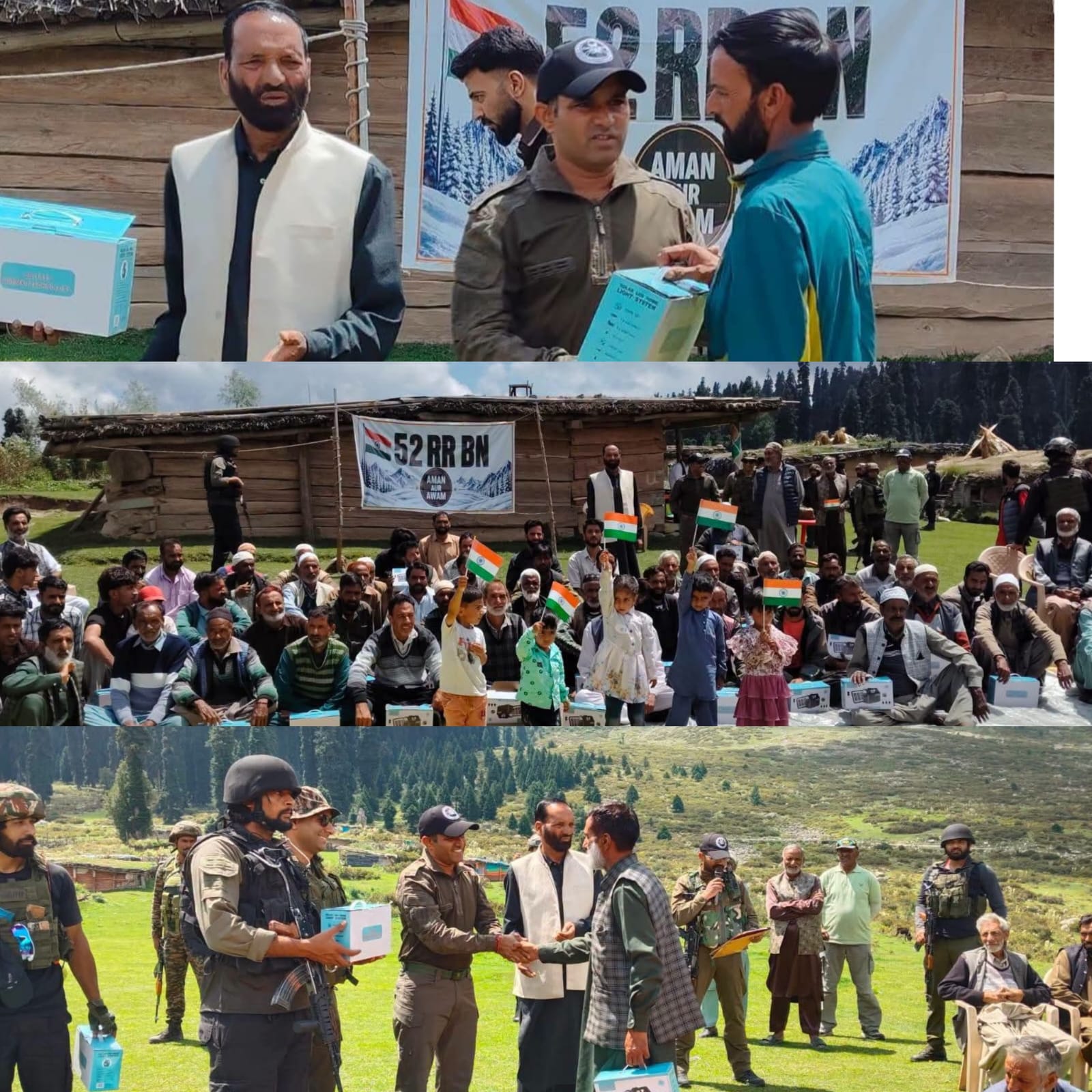
A community outreach programme held at Bandibala (Sultanpur Kandi) in Baramulla district brought that everyday reality into focus, with solar lights distributed among families living in the Dhoks to help children continue their studies after sunset.
The programme, organised by the 52 Rashtriya Rifles Battalion under the aegis of Headquarters 10 Sector Rashtriya Rifles/CIF Kilo, brought together healthcare assistance, educational support, youth engagement and awareness of government welfare schemes for members of the Gujjar-Bakkarwal community.
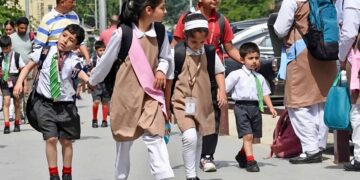
The distribution of solar lights was one of the most practical components of the programme. For families in remote settlements, access to reliable lighting can be an everyday concern. For children, having a source of light after sunset can provide additional time to read, complete homework or prepare for examinations.
The initiative also included a free medical camp for residents, providing an opportunity for community members to seek medical assistance closer to their place of residence.
Alongside healthcare, the programme addressed questions related to education and future opportunities. Awareness sessions were held on various government welfare schemes and benefits, while local youth engaged in discussions around education, skill development and career opportunities.
Army personnel also interacted with community elders and local representatives to understand concerns relating to healthcare, education, livelihoods and other welfare-related issues.
According to the Army, 143 residents from Bandibala and adjoining areas participated in the programme.
For communities living in remote and difficult-to-access areas, information can be as important as physical assistance. Understanding what welfare programmes are available, where to seek support and what opportunities exist can help residents make better use of services already available to them.
That makes community outreach a two-way process. It is not only about providing assistance; it is also about creating an opportunity for residents to communicate their concerns and for institutions involved in the programme to understand those concerns more closely.
The Bandibala programme was conducted under the theme “Aman and Awam”, with an emphasis on interaction and cooperation between the security forces and local residents.
The focus on the Gujjar-Bakkarwal community also highlights the particular circumstances of families living in seasonal and remote settlements. Distance from permanent infrastructure can affect access to healthcare, education-related resources and information about public welfare programmes.
The intervention at Bandibala was modest in its individual components a medical camp, solar lights, awareness sessions and community interaction but each addressed a practical aspect of everyday life.
For a child, the significance of a solar light may be measured simply in the number of pages that can be read after sunset.
For a family, a medical camp may mean access to basic healthcare without travelling far.
For a young person, information about skills, education or careers may open an avenue that was previously unfamiliar.
And for community elders, an opportunity to discuss local concerns can itself be meaningful.
These outcomes are difficult to measure in numbers alone.
The value of community initiatives is often found in such small, everyday changes: a student able to study a little longer, a family receiving medical attention, a resident learning about a welfare benefit, or a young person discovering a possible career path.
The Bandibala outreach therefore offers a glimpse into the practical challenges and aspirations of a community living in a remote part of Baramulla and into the importance of connecting people with healthcare, information, education and opportunity.
When the sun sets over the Dhoks, the landscape may grow dark quickly.
But for the children who now have another source of light, the opportunity to keep studying does not have to end with daylight.
Author can be reached at: nazirshahid378@gmail.com